Archaeological site · Sohag
Shunet El Zebib
Egypt's ancient mud-brick giant rising from Abydos desert
- City
- Sohag
- Era
- Early Dynastic Period, 2nd Dynasty, c. 2700 BC
Overview
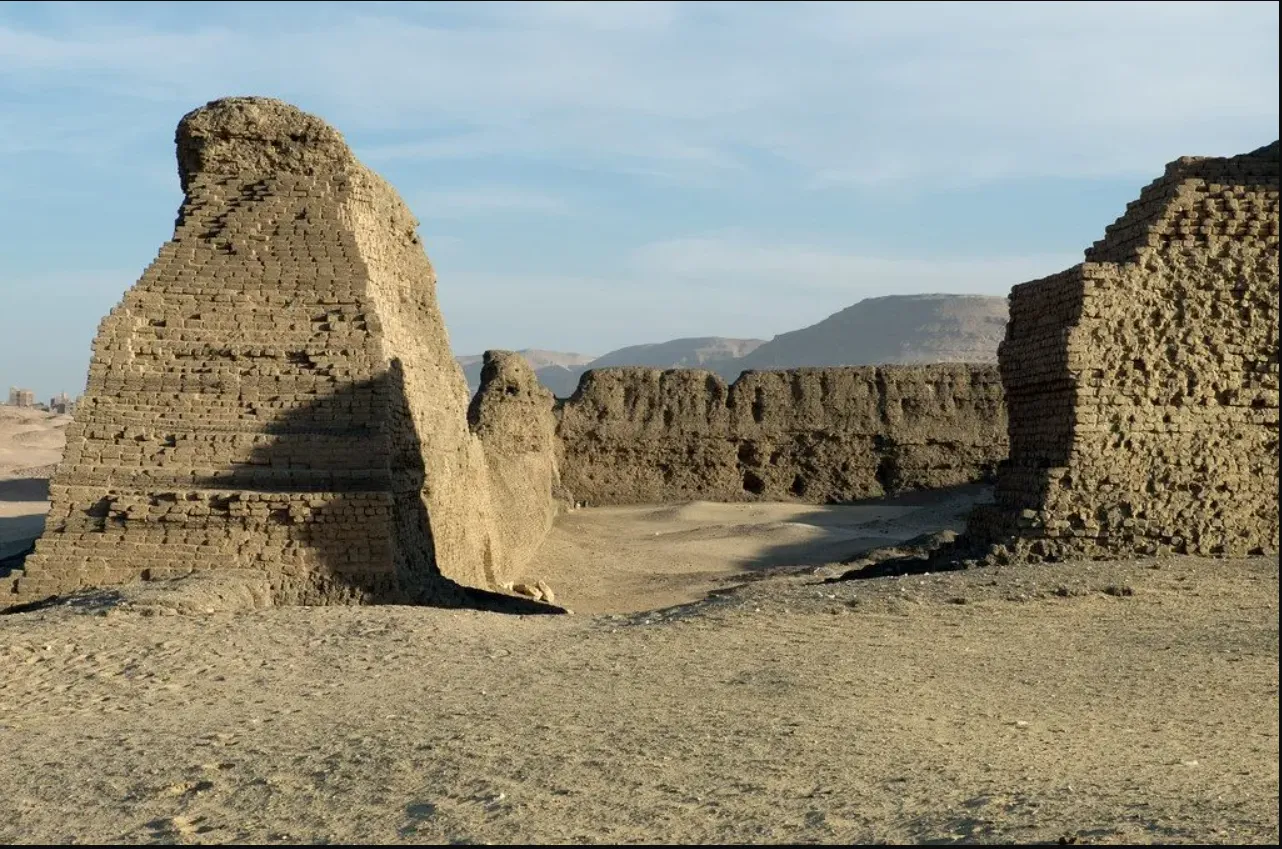
Shunet El Zebib, whose Arabic name means roughly "the raisin storehouse", is a massive mud-brick enclosure at North Abydos in Sohag Governorate, Upper Egypt. It was built for King Khasekhemwy, the last ruler of the Second Dynasty, around 2700 BC. Local people gave it its name because the enormous walls looked like a granary or storehouse. Today it ranks among the oldest freestanding monumental structures in Egypt, rising from the desert edge near the cultivated land.
The enclosure was not a storehouse but a royal funerary monument, a ceremonial complex where offerings and rituals for the dead king were performed. Its high, thick walls were built of sun-dried mud brick and enclosed a large rectangular courtyard. The outer faces were articulated with recessed panels, a style linked to early Egyptian royal architecture. Khasekhemwy's tomb lies a short distance away at Umm el-Qa'ab, the early royal cemetery of Abydos.
The site belongs to the wider Abydos landscape, which Egyptians regarded as a sacred centre of the cult of Osiris. Nearby are the ancient town mound of Kom el-Sultan and the great temples of Seti I and Ramesses II. Archaeological missions have studied Shunet El Zebib for decades, and the surviving walls are valuable evidence for how early Egyptians built, planned and conserved monumental architecture in mud brick.
What to see
- 01The towering outer mud-brick walls, still impressive after nearly 5,000 years
- 02The recessed-panel façade, an early example of Egyptian monumental design
- 03The large interior courtyard, once used for royal funerary rituals
- 04Views toward Umm el-Qa'ab and the wider Abydos desert landscape
Visitor tips
- Combine your visit with the Temple of Seti I and other Abydos sites, but confirm opening arrangements and ticket details locally before you go.
- Bring sun protection, water and sturdy shoes, as the area is open, dusty and has little shade.
- Hire a licensed local guide if possible, since Early Dynastic sites have few signs and are easier to appreciate with explanation.
Frequently asked questions
What is Shunet El Zebib?
It is a huge mud-brick funerary enclosure at Abydos in Sohag, built for King Khasekhemwy of the Second Dynasty around 2700 BC. It is one of the oldest standing monumental structures in Egypt.
Why is it called the "raisin storehouse"?
The name is a later local one. The large, fortress-like walls looked like a granary or storehouse to villagers, although the building was actually a royal funerary monument.
Where is Shunet El Zebib located?
It lies in North Abydos, in the desert near the town of Al-Balyana in Sohag Governorate, Upper Egypt, close to Kom el-Sultan and not far from the Temple of Seti I.