Temple · Abu Simbel · Most visited
Abu Simbel Temple
Ramesses II's colossal monument carved into the Nubian cliffs
- City
- Abu Simbel
- Type
- Temple
- Era
- New Kingdom, 19th Dynasty, 13th century BC
Overview
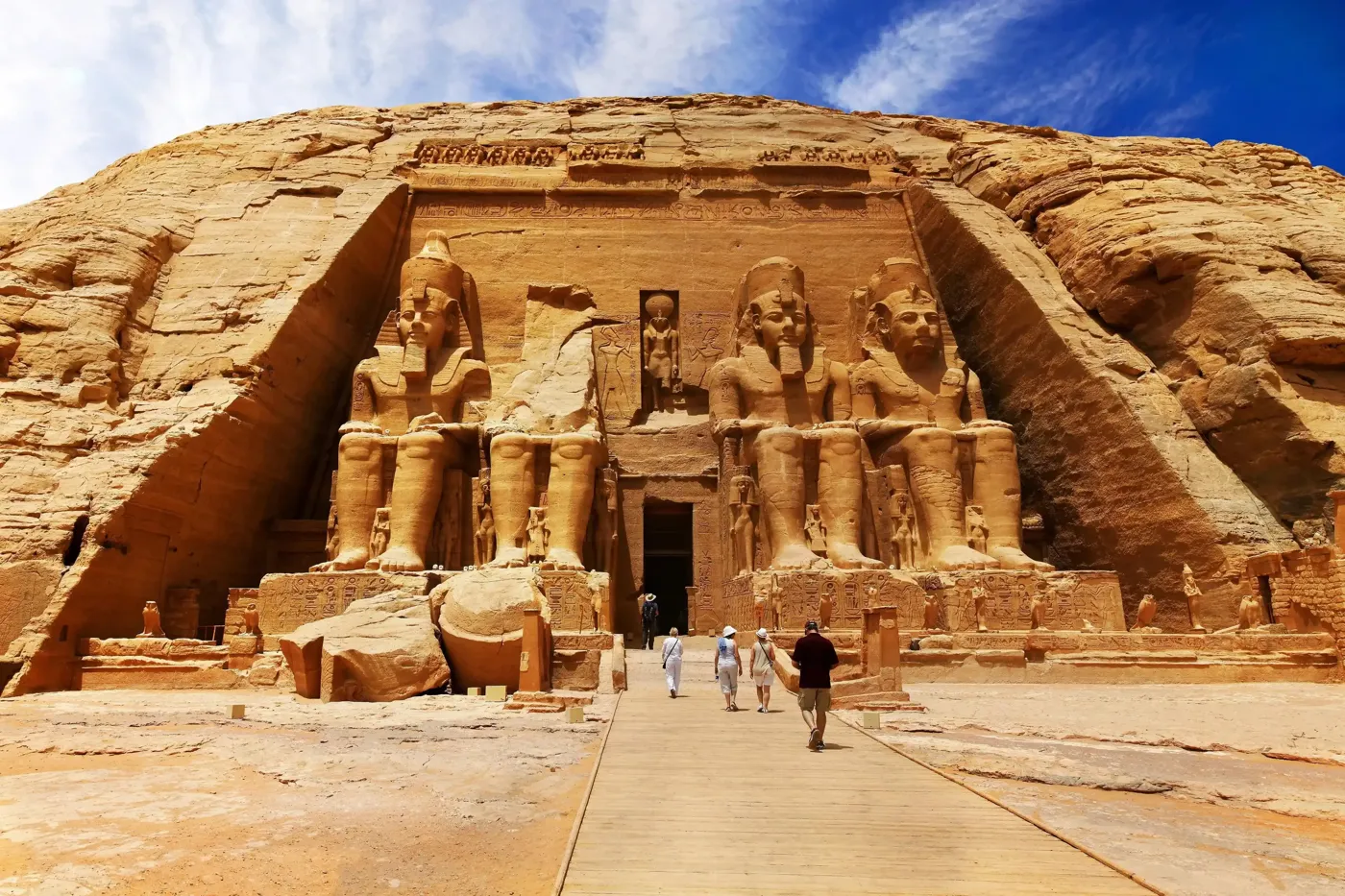
Abu Simbel Temple is a pair of rock-cut temples on the western bank of Lake Nasser in Egypt's far south, close to the Sudanese border. Commissioned by Ramesses II in the 13th century BC, the complex was carved directly into a sandstone cliff to project royal power and religious devotion on Egypt's Nubian frontier. Its imposing façade, guarded by four colossal seated figures of the pharaoh, remains one of the most recognisable images of ancient Egypt.
The Great Temple was dedicated to the gods Amun-Re, Ra-Horakhty and Ptah, alongside the deified Ramesses himself. Beyond the façade, a hall of pillars fronted by Osiride statues of the king leads deeper into the rock, with wall reliefs celebrating his military campaigns, including the Battle of Kadesh. A smaller neighbouring temple honours the goddess Hathor and Queen Nefertari, an unusual and prominent tribute to a royal wife.
Abu Simbel lay largely buried by drifting sand until Johann Ludwig Burckhardt noticed it in 1813, and Giovanni Belzoni entered it in 1817. In the 1960s, the rising waters created by the Aswan High Dam threatened to submerge the site, prompting an international UNESCO campaign. Between 1964 and 1968 the temples were cut into blocks and reassembled on higher ground. They now form part of the UNESCO World Heritage site Nubian Monuments from Abu Simbel to Philae.
What to see
- 01The four colossal seated statues of Ramesses II on the Great Temple façade
- 02The pillared hall with Osiride statues and reliefs of the Battle of Kadesh
- 03The inner sanctuary, aligned so that sunlight reaches it on two days each year
- 04The Small Temple of Hathor and Nefertari, with statues of the queen beside the king
Visitor tips
- Check current opening hours and ticket details with official sources before you travel, as they can change.
- Abu Simbel is far south of Aswan, typically around three hours by road, so plan your transport in advance or consider a flight.
- Go early to avoid the strongest heat, wear sun protection, and book well ahead if you want to visit around the sun-alignment dates in February and October.
Frequently asked questions
Who built Abu Simbel Temple and why?
Ramesses II built it in the 13th century BC. The temples honoured major gods and the king himself, and they asserted Egypt's power and presence on its southern frontier with Nubia.
Why was Abu Simbel moved?
The construction of the Aswan High Dam created Lake Nasser, whose rising waters would have flooded the temples. Between 1964 and 1968, an international UNESCO-led effort cut them into blocks and rebuilt them on higher ground.
What is the sun festival at Abu Simbel?
Twice a year, around 22 February and 22 October, sunrise light travels along the Great Temple's axis into the inner sanctuary and illuminates several of the seated statues. It is widely linked to the king's life and reign, and draws many visitors.