Archaeological site · Luxor
Deir El Madina
Where the artisans of the pharaohs lived
- City
- Luxor
- Era
- New Kingdom, c. 1550–1070 BC (with a Ptolemaic temple)
Overview
Deir El Madina is the site of an ancient village on Luxor's West Bank, set in a sheltered valley near the Valley of the Queens. Its ancient name was Set Maat, meaning the Place of Truth. It was home to the skilled artisans who cut and decorated the royal tombs in the Valley of the Kings and the Valley of the Queens during the New Kingdom. Few sites show the daily life of ordinary ancient Egyptians as vividly as this one.
The village was occupied for centuries, from the early New Kingdom until the end of the Twentieth Dynasty. Its houses of mudbrick and stone line a main street inside an enclosure wall. The residents left thousands of ostraca, which are limestone flakes and pottery sherds covered in letters, accounts, and sketches. Among them are records of a work stoppage under Ramesses III, often described as one of the earliest known labor strikes in history.
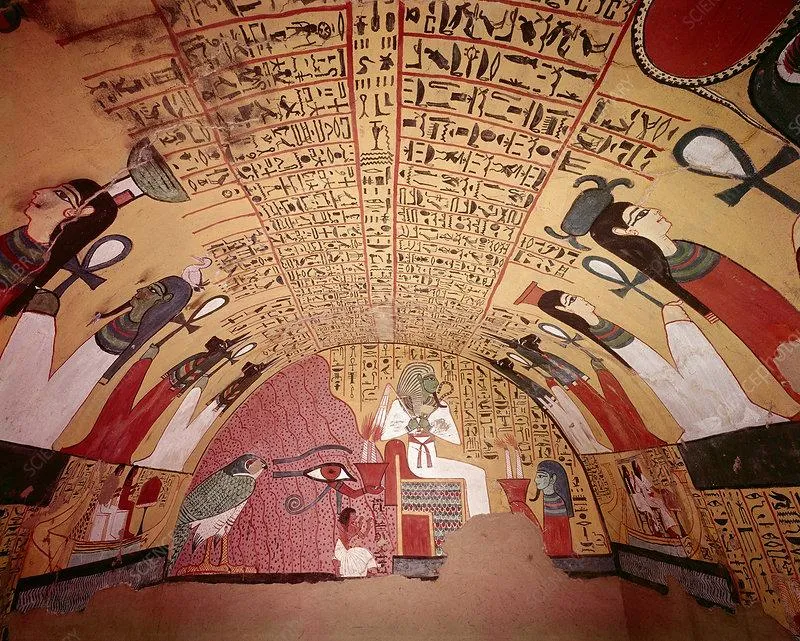
Above the village stands a small temple of Hathor and Maat from the Ptolemaic period, begun under Ptolemy IV and enlarged by later rulers. The Arabic name, meaning Monastery of the Town, comes from the later Christian reuse of the temple. On the hillside, the workmen's own tombs, including those of Sennedjem, Inherkhau, and Pashed, are decorated with some of the most colorful scenes of the afterlife in Egypt.
What to see
- 01The Tomb of Sennedjem, a small burial chamber with vividly painted scenes of the afterlife
- 02The Ptolemaic Temple of Hathor and Maat, a compact sanctuary preserved on the hillside
- 03The ruins of the workmen's village, with its main street and house foundations
- 04The tombs of Inherkhau and Pashed, decorated with detailed funerary scenes
Visitor tips
- Ask at the ticket office which tombs are open on the day of your visit, as access to individual tombs can change and may need separate tickets.
- Wear a hat and sturdy shoes and bring water. The village and temple are open to the sun, the ground is uneven, and the tomb stairs can be steep.
- Combine your visit with nearby West Bank sites such as the Valley of the Queens, Medinet Habu, and the Ramesseum, and visit early in the day to avoid the midday heat.
Frequently asked questions
What is Deir El Madina in Luxor?
Deir El Madina is the ruined village of the royal tomb builders on Luxor's West Bank. Its ancient name was Set Maat, the Place of Truth. The site includes the village ruins, the workmen's decorated tombs, and a small Ptolemaic temple of Hathor and Maat.
Who lived in Deir El Madina?
The village housed the artisans, including stonecutters, draftsmen, painters, and scribes, who built and decorated the royal tombs of the Valley of the Kings and Valley of the Queens during the New Kingdom, together with their families.
Why is it called the Monastery of the Town?
The Arabic name Deir El Madina means Monastery of the Town. It refers to the Christian monastic community that reused the Ptolemaic temple in later centuries, long after the ancient village had been abandoned.