Overview
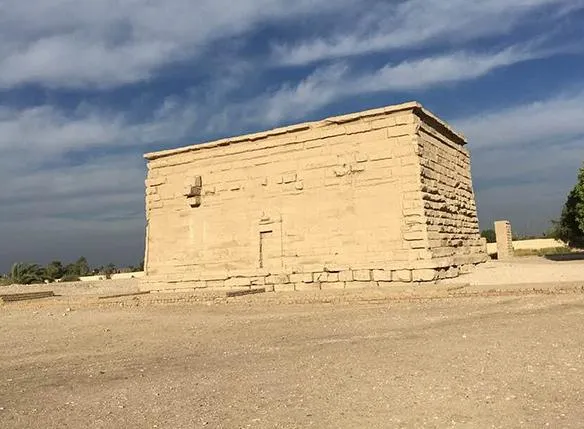
Deir El-Shelwit is a small but atmospheric temple on the West Bank of Luxor. It stands at the edge of the desert, where cultivated land gives way to the Theban hills, south of the better-known complex of Medinet Habu. Built of sandstone in the Roman period, it is usually associated with the reign of Emperor Hadrian in the second century AD, and its decoration is linked to Hadrian and his successors. The temple is dedicated chiefly to Isis, one of the most widely worshipped goddesses of the ancient Mediterranean world.
Though modest in scale, the temple follows a traditional Egyptian plan: an enclosure wall, a columned hall, and a series of small chambers leading toward the sanctuary. Its walls carry reliefs in which Roman emperors appear in the guise of pharaohs, making offerings to Isis and other Theban deities. These scenes show how Egyptian religious art and royal titles continued for centuries after Egypt came under Roman rule, even in a remote corner of the Theban necropolis.
In later centuries the temple was reused as a Christian monastery, which explains the word deir, Arabic for monastery, in its name. Crosses and other traces of Christian occupation can be seen in places, and some of the original decoration was affected by this change of use. Today the site is quiet and rarely crowded, making it a rewarding stop for travellers who combine the major West Bank monuments with lesser-known sites such as Medinet Habu and Deir el-Medina.
What to see
- 01Reliefs showing Roman emperors presenting offerings to Isis and Theban gods
- 02The columned hall and small chambers of the traditional temple plan
- 03Crosses and traces of the later Coptic monastic reuse
- 04The desert-edge setting beneath the Theban mountain, away from the crowds
Visitor tips
- Confirm opening arrangements and ticketing locally or with the West Bank antiquities office before you go, as small sites can differ from the major ones.
- Visit in the early morning or late afternoon, and bring water, a hat, and sun protection, since there is little shade.
- Combine the visit with nearby Medinet Habu and Deir el-Medina, and consider a licensed guide to explain the Roman-period reliefs.
Frequently asked questions
Where is Deir El-Shelwit located?
It is on the West Bank of Luxor, at the desert edge south of the Medinet Habu area, within the wider Theban necropolis.
Who built the temple of Deir El-Shelwit?
It dates to the Roman period and is usually linked to Emperor Hadrian in the second century AD, with decoration associated with him and later rulers. It is dedicated mainly to the goddess Isis.
Why is it called a deir (monastery)?
In later centuries the temple was reused as a Christian monastery. The Arabic word deir means monastery, and the name has remained in use.