Pyramids & tombs · Giza · Most visited
Saqqara Monuments
Where Egypt's first pyramid rose above Memphis
- City
- Giza
- Type
- Pyramids & tombs
- Era
- Early Dynastic to Ptolemaic Period, c. 3000–30 BC
Overview
Saqqara is the vast necropolis of ancient Memphis, Egypt's first capital, set on the desert plateau west of the Nile in Giza Governorate. It served as a burial ground for more than three thousand years, from the Early Dynastic Period to the Ptolemaic and Roman eras. Royal pyramids, noble tombs and animal cemeteries share the plateau, making it one of the richest archaeological landscapes in the world. It is part of the UNESCO-listed site Memphis and its Necropolis.
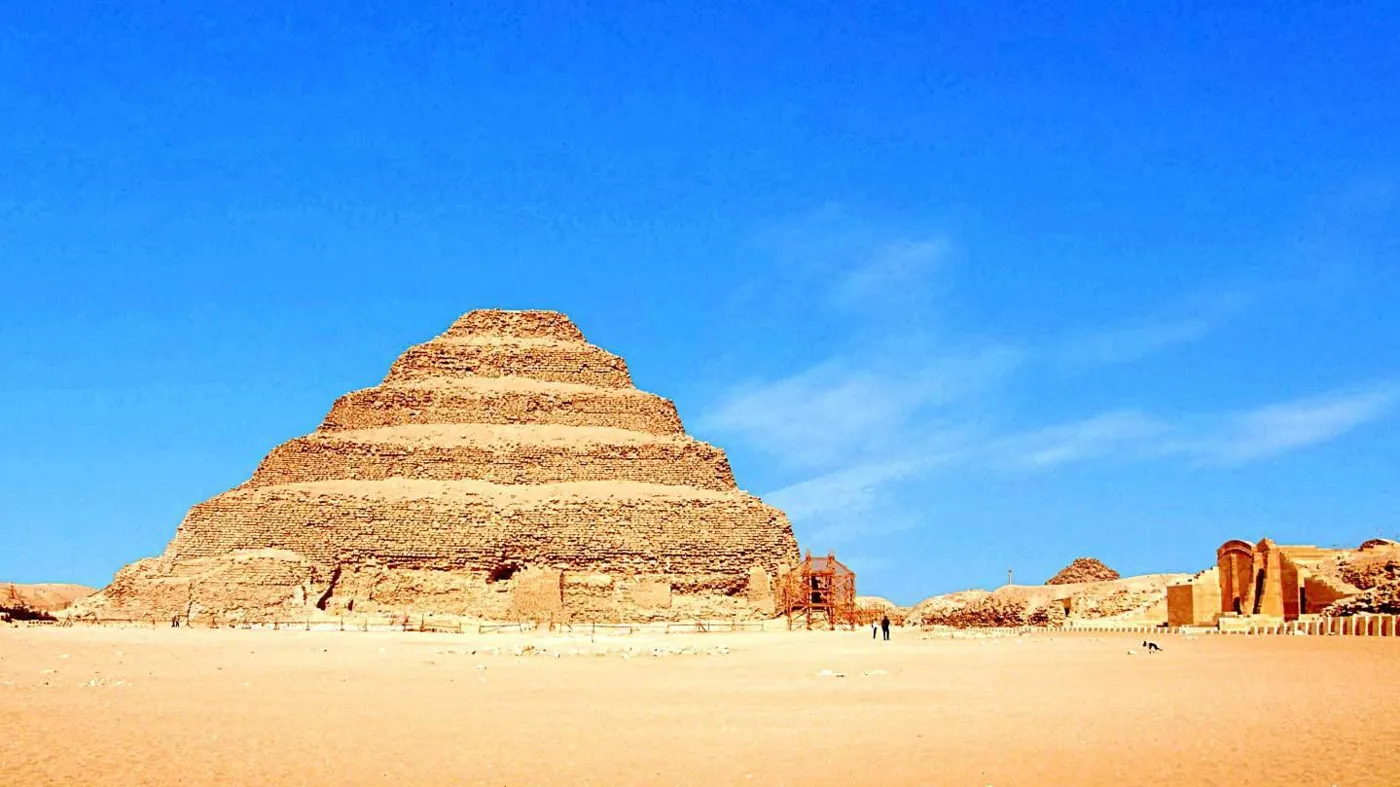
The Step Pyramid of King Djoser, built in the Third Dynasty more than 4,600 years ago, is the centrepiece of Saqqara. Traditionally credited to the architect Imhotep, it is widely regarded as the earliest large-scale stone monument in Egypt, rising in six steps from an original mastaba design. It stands within a monumental enclosure of courts, colonnades and dummy buildings that reproduce royal ceremonial architecture in stone, while galleries and chambers extend beneath it.
Beyond Djoser's complex, Saqqara preserves later pyramids such as those of Unas and Teti, whose burial chambers are inscribed with Pyramid Texts, the oldest known religious corpus of funerary spells. Old Kingdom officials' tombs, including the Mastaba of Ti and the Mastaba of Mereruka, are famed for finely carved reliefs of farming, fishing, craftwork and daily life. The Serapeum, the underground burial place of the sacred Apis bulls, and the nearby Imhotep Museum round out the visit.
What to see
- 01The Step Pyramid of Djoser and its surrounding ceremonial enclosure
- 02Pyramid Texts inside the burial chamber of the Pyramid of Unas
- 03Finely carved reliefs in the Mastaba of Ti and the Mastaba of Mereruka
- 04The Serapeum, the underground galleries of the sacred Apis bulls
Visitor tips
- Check which tombs and pyramids are currently open before you go, as access to individual monuments can change.
- Wear sturdy walking shoes, bring water and sun protection, and expect narrow, low passages inside some tombs and pyramids.
- Combine Saqqara with nearby Memphis, Dahshur or Abusir for a fuller picture of Egypt's pyramid-building age, ideally with a licensed guide.
Frequently asked questions
Where is Saqqara located?
Saqqara lies on the west bank of the Nile in Giza Governorate, roughly 30 km south of central Cairo, close to the ruins of ancient Memphis.
What is Saqqara famous for?
It is best known for the Step Pyramid of Djoser, the Pyramid Texts of Unas and Teti, richly decorated Old Kingdom mastabas, and the Serapeum of the Apis bulls.
Who built the Step Pyramid of Saqqara?
It was built for King Djoser of the Third Dynasty, and the design is traditionally credited to his architect and official Imhotep.