Archaeological site · Aswan
Gebel al-Silsila
Egypt's great sandstone quarry on the Nile
- City
- Aswan
- Era
- Pharaonic to Roman periods (New Kingdom quarrying at its peak)
Overview
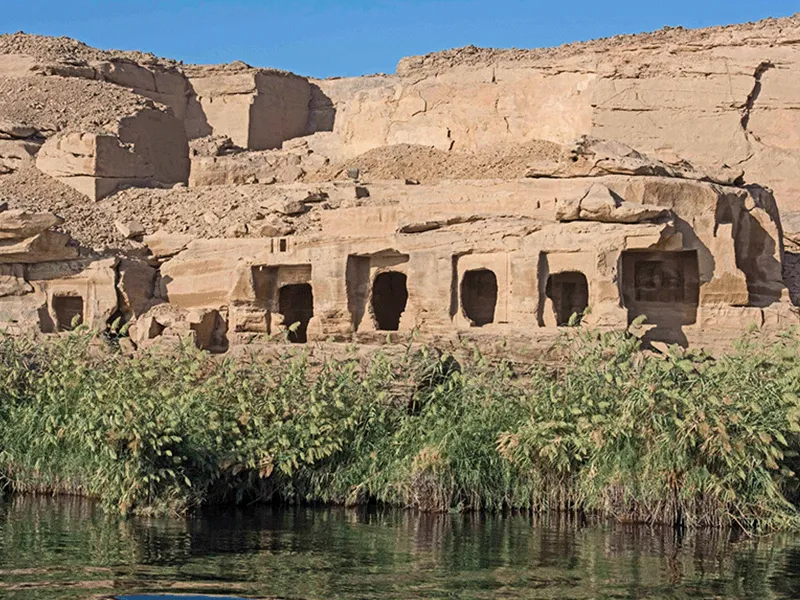
Gebel al-Silsila is an archaeological site on both banks of the Nile, roughly 65 kilometres north of Aswan and between Edfu and Kom Ombo. At this point the river narrows between steep sandstone cliffs, a setting that the ancient Egyptians exploited on a grand scale. The site's ancient name is usually given as Kheny, and today it is recognised as one of the most important quarry landscapes of the ancient world.
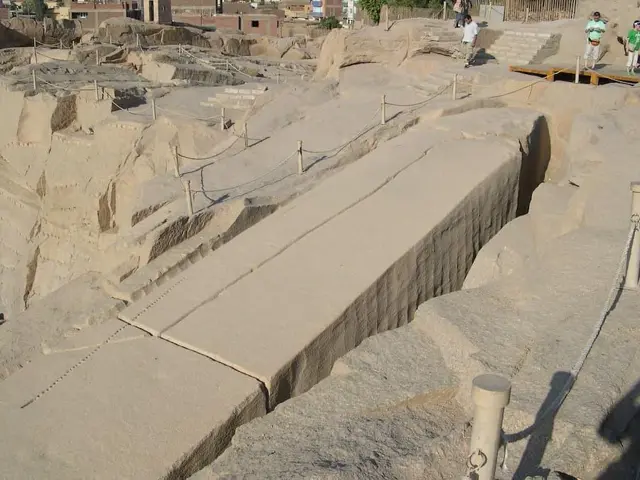
The sandstone cut here was prized for building, and quarrying is attested from the Pharaonic era through the Greco-Roman period, with particularly intensive activity in the New Kingdom. Blocks were cut from the cliffs and floated down or across the river to construction sites, including major temples in Upper Egypt. Visitors can still see towering quarry faces, working areas, tool marks and the traces of ancient labour.
Gebel al-Silsila was also a place of worship, closely linked to the Nile and its annual flood. Shrines, rock-cut chapels and commemorative stelae honour gods such as Hapy, personification of the inundation, and record the activity of several kings. The best-known monument is the rock-cut shrine of Horemheb on the west bank. The Arabic name means 'Mountain of the Chain', and popular tradition links it to a chain once stretched across the narrow river.
What to see
- 01The rock-cut shrine (speos) of Horemheb on the west bank, with its columned façade and carved scenes
- 02Immense quarry faces and working areas showing ancient cutting methods and tool marks
- 03Commemorative stelae and small shrines carved into the cliffs by Egyptian kings
- 04The dramatic setting where the Nile narrows between sandstone cliffs, best appreciated from the water
Visitor tips
- Check current access arrangements and opening conditions locally before you go, as visits are often combined with Nile cruises or arranged through tour operators from Aswan, Edfu or Kom Ombo.
- Wear sturdy shoes, a hat and sun protection, and carry water: the ground is uneven and there is little shade among the quarries.
- Allow time to see both the quarries and the shrines, and ask a licensed guide to explain the quarry marks and inscriptions, which are easy to overlook.
Frequently asked questions
Where is Gebel al-Silsila located?
Gebel al-Silsila lies on both banks of the Nile, roughly 65 kilometres north of Aswan, between Kom Ombo and Edfu in Upper Egypt.
What does Gebel al-Silsila mean?
The Arabic name means 'Mountain of the Chain'. Popular tradition connects it with a chain stretched across the narrow river. The ancient Egyptian name is usually given as Kheny.
Why was Gebel al-Silsila important in ancient Egypt?
It was one of the main sources of sandstone for building. Stone cut here was shipped along the Nile to construct temples in Upper Egypt, and the site also housed shrines and stelae dedicated to the Nile flood god Hapy and others.