Overview
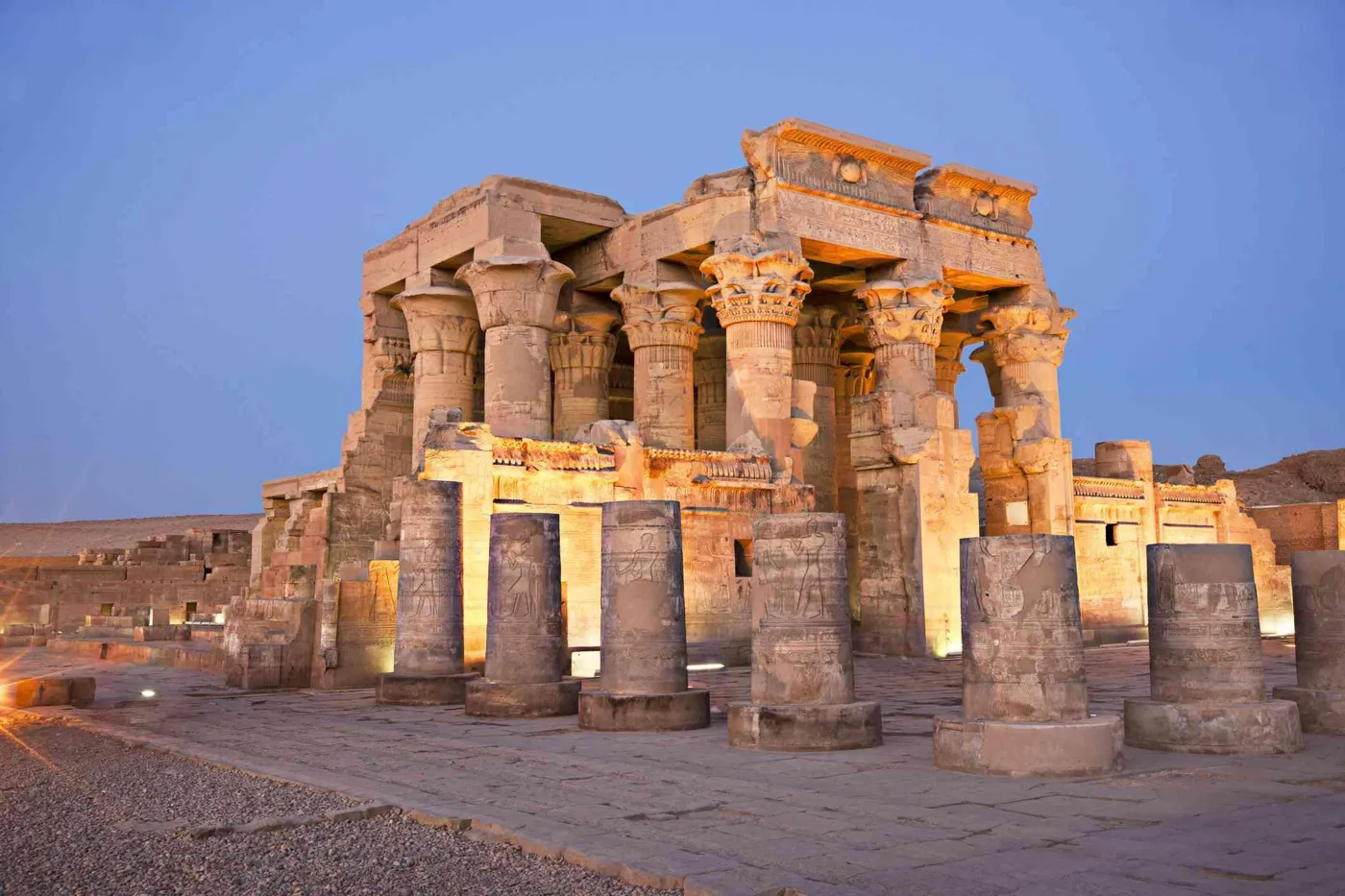
Perched on a curving bank of the Nile about 40 kilometres north of Aswan, Kom Ombo Temple is one of Egypt's most distinctive Ptolemaic monuments. Its raised position once overlooked a fertile river landscape, and today it is a favourite stop for travellers on the Nile. The temple is unusual because it honours two principal gods at once: Sobek, the crocodile-headed lord of water and fertility, and Haroeris, a form of Horus the Elder linked to the sky and kingship.
The building follows a symmetrical double plan. Two entrances, paired halls and twin sanctuaries run side by side along one axis, with one half devoted to Sobek and the other to Haroeris. Construction began in the Ptolemaic period, in the second century BC, and later rulers added to the structure and its decoration, with work continuing into the Roman era. The walls carry finely cut reliefs of kings making offerings to the gods, while tall columns display elegant plant-inspired capitals.
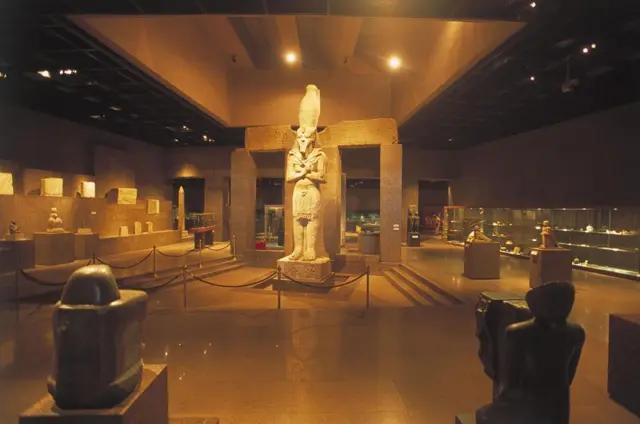
Beyond the main sanctuaries, the site preserves details that reveal religious and everyday life in antiquity. A chapel associated with Hathor held mummified crocodiles, a well and Nilometer-type structure reflect the importance of the river, and a famous relief is often described as showing medical and surgical instruments. The nearby Crocodile Museum adds context with animal mummies and related finds, and the riverside setting makes late-afternoon visits especially atmospheric.
What to see
- 01The symmetrical double plan, with twin entrances, halls and sanctuaries for Sobek and Haroeris
- 02Detailed wall reliefs of kings and gods, including the well-known scene of medical and surgical instruments
- 03The Hathor chapel and the mummified crocodiles found at the site, complemented by the nearby Crocodile Museum
- 04The Nile-side terrace views, the well and Nilometer-type structure, and the temple's golden light at sunset
Visitor tips
- Check current opening hours and ticket prices through official Egyptian sources or your tour operator before you go, as they can change.
- Late afternoon is a popular time for atmosphere and softer light, but bring sun protection, water and sturdy shoes for the uneven stone paths.
- Combine your visit with the Crocodile Museum next to the temple, and plan Kom Ombo as part of an Aswan–Edfu route by road or Nile cruise.
Frequently asked questions
Which gods was Kom Ombo Temple dedicated to?
It was dedicated mainly to Sobek, the crocodile-headed god of water and fertility, and Haroeris, a form of Horus the Elder associated with the sky and kingship. Other deities, including Hathor, were also honoured at the site.
Why is Kom Ombo called a double temple?
Its plan is symmetrical along a central axis, with two entrances, two sets of halls and two parallel sanctuaries. This allowed two gods and their cults to be worshipped under one roof.
Where is Kom Ombo Temple and how do you get there?
It stands on the east bank of the Nile, about 40 kilometres north of Aswan. Visitors usually reach it by road from Aswan or Edfu, or as a stop on a Nile cruise between the two cities.