Coptic monument · Aswan
Samaan Monastery
A fortress of faith rising from Aswan's desert
- City
- Aswan
- Type
- Coptic monument
- Era
- Coptic and Medieval, c. 7th–13th century AD
Overview
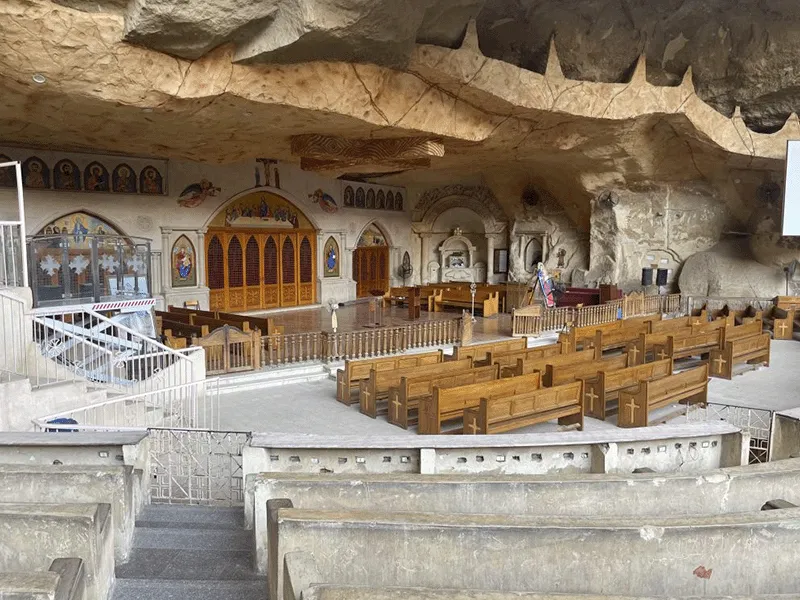
Samaan Monastery, known in Arabic as Deir Anba Samaan, stands on the west bank of the Nile at Aswan, in a stretch of desert overlooking the river and close to the cliffs of the Tombs of the Nobles. It is among the most impressive surviving medieval Coptic monasteries in Egypt. Its high stone and mudbrick walls, terraced layout and tower-like structures give it the look of a desert fortress, while its silence and isolation recall the monastic ideals of early Egyptian Christianity.
Tradition links the monastery with the early centuries of Christianity in Upper Egypt, and it was originally associated with a local saint, Anba Hadra, before the name of Saint Simeon became attached to it. Most of the buildings seen today belong to the medieval period, with later rebuilding and repairs. The community was eventually abandoned, around the 13th century according to most accounts. Note that the Arabic title al-Kharraz usually refers to Simeon the Tanner of Cairo, a different saint.
The complex is arranged on two main levels. The lower level holds the church and service areas, and the upper level contains the monks' living quarters, with cells, storerooms, a kitchen and other workspaces. Traces of wall paintings and Arabic and Coptic inscriptions survive in places, giving a glimpse of daily monastic life. Visitors traditionally cross the Nile and approach across the sand on foot or by camel, which adds to the sense of journeying to a remote desert retreat.
What to see
- 01The massive fortified enclosure walls and tower-like structures of stone and mudbrick
- 02The ruined church with its apse and surviving traces of wall paintings
- 03The monks' cells, kitchen, storerooms and workrooms on the upper terraces
- 04Panoramic views over the Nile, Aswan and the surrounding desert from the monastery walls
Visitor tips
- Visit early in the morning or late in the afternoon, since the desert is very hot and there is little shade inside the ruins.
- Wear sturdy closed shoes, a hat and sunscreen, and carry plenty of drinking water.
- Confirm current access, transport and ticket arrangements locally before you go, and consider combining the visit with the nearby Tombs of the Nobles.
Frequently asked questions
Where is Samaan Monastery located?
It is on the west bank of the Nile at Aswan, in the desert above the river and not far from the Tombs of the Nobles.
Is Samaan Monastery still in use?
No. The monastery was abandoned centuries ago, around the 13th century according to most accounts, and today it is a ruined historic site open to visitors.
How do visitors usually reach the monastery?
Visitors traditionally cross the Nile from Aswan, then walk or ride a camel across the desert. Check locally for current transport options and access conditions.