Overview
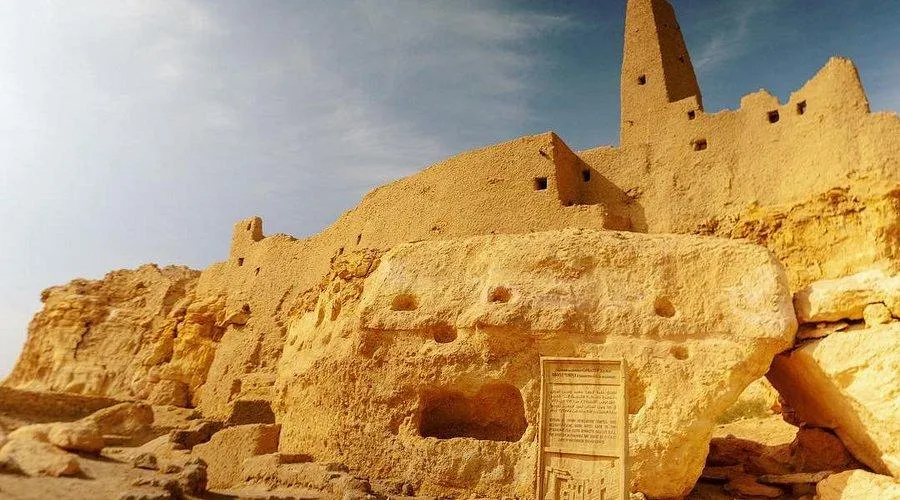
The Temple of Aghurmi, known in Arabic as the Temple of the Oracle (معبد الوحي), stands on a rocky hill in the Aghurmi district, a few kilometres east of Siwa town in Egypt's Western Desert. It was dedicated to the god Amun and built in the 26th Dynasty, traditionally in the reign of Amasis II during the 6th century BC. Its remote oasis setting, far from the Nile Valley, makes it one of the most distinctive sanctuaries of ancient Egypt.
The temple's fame rests on its oracle. Greek and Roman writers describe Siwa's Amun, whom the Greeks identified with Zeus, as a source of prophecy consulted from far beyond Egypt. The best-known visitor was Alexander the Great, who crossed the desert in 331 BC and consulted the god. Ancient accounts disagree on what he was told, so the details are debated, but the visit shaped the oasis's legendary reputation.
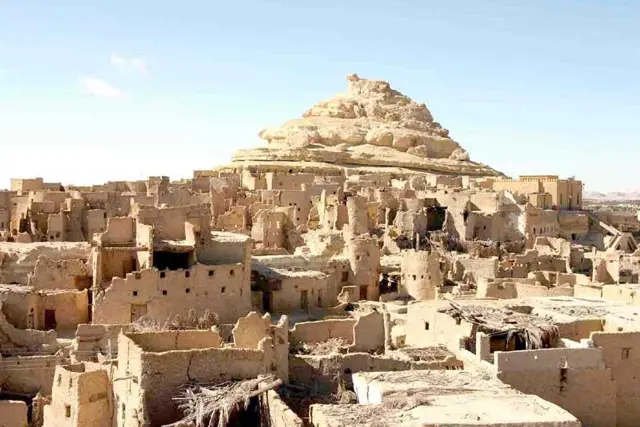
Today the sanctuary survives as a partly ruined structure of local stone, with remains of walls, passages and small chambers, and traces of carved inscriptions in places. It sits beside the old fortified mud-brick settlement of Aghurmi and overlooks palm groves and the surrounding desert. The nearby ruins of the Temple of Umm Ubayda, also linked to Amun, help complete the picture of Siwa's religious past.
What to see
- 01The hilltop sanctuary of Amun, the heart of Siwa's ancient oracle
- 02Surviving chambers, passages and wall remains of the temple
- 03Carved inscriptions and relief fragments in surviving sections
- 04Panoramic views over palm groves and the old Aghurmi village, especially near sunset
Visitor tips
- Visit in the late afternoon for softer light, cooler temperatures and good views over the oasis, but confirm current opening arrangements and ticket details locally.
- Wear sturdy shoes and bring water and sun protection, as the hilltop is exposed and the ground is uneven in places.
- Combine your visit with the old Aghurmi village and the Temple of Umm Ubayda, and consider a licensed local guide to explain the oracle's history.
Frequently asked questions
Who built the Temple of Aghurmi and when?
It dates to the 26th Dynasty and is traditionally attributed to the reign of Amasis II in the 6th century BC. It was dedicated to Amun.
Why is it called the Oracle Temple?
Ancient sources describe the Amun of Siwa as an oracle consulted by visitors seeking guidance. The temple at Aghurmi is widely identified as the centre of this oracle.
Did Alexander the Great visit the Temple of Aghurmi?
Ancient writers record that Alexander travelled to Siwa in 331 BC and consulted the oracle of Amun. Accounts of what was said differ, so those details remain debated.