Overview
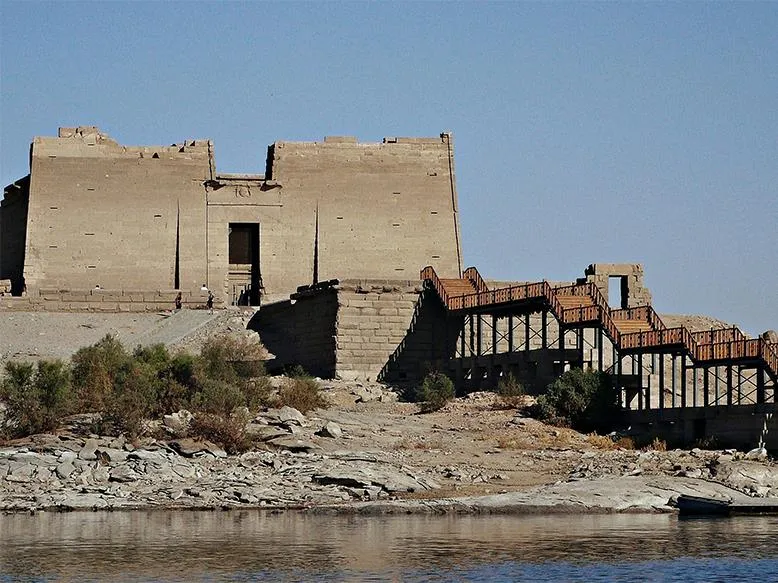
The Temple of Kalabsha, known in antiquity as Talmis, is among the largest free-standing temples of Egyptian Nubia. It stands on the western shore of Lake Nasser, close to the Aswan High Dam. The sandstone complex was dedicated chiefly to Mandulis, a Nubian solar deity, and also honored Egyptian gods such as Isis and Osiris. Its size and well-preserved plan make it one of the most rewarding Nubian monuments to visit.
The temple in its present form dates to the Roman period and is generally attributed to the reign of Augustus, though it was built on the site of earlier sanctuaries. It follows the Egyptian temple tradition, with a monumental pylon, a court, a columned hall and an inner sanctuary. Greek inscriptions and traces of later reuse as a Christian church show how long the building remained part of Nubian life.
The temple's modern story is as notable as its ancient one. When the Aswan High Dam threatened to flood Lower Nubia, an international rescue effort was launched under UNESCO's guidance. In the early 1960s a West German team dismantled Kalabsha and reassembled it on higher ground near the dam. Other relocated monuments, including Beit el-Wali and the Kiosk of Qertassi, now stand at the same site.
What to see
- 01The monumental pylon and the court behind it, which set the scale of the temple
- 02Relief scenes of the emperor making offerings to Egyptian and Nubian deities in the columned hall and sanctuary
- 03Greek inscriptions and traces of the temple's later Christian use
- 04Nearby relocated monuments, Beit el-Wali and the Kiosk of Qertassi, with views over Lake Nasser
Visitor tips
- The temple stands on the lake and is usually reached by a short boat transfer, so confirm access and arrangements locally before you go.
- Visit in the morning if possible, and bring sun protection, water and comfortable shoes, as the site has little shade.
- Combine Kalabsha with Beit el-Wali and the Kiosk of Qertassi, which are close by, and allow time for photographs of the lake.
Frequently asked questions
Who was the Temple of Kalabsha dedicated to?
It was dedicated mainly to Mandulis, a Nubian solar god, and also honored deities of the Egyptian pantheon such as Isis and Osiris.
Why was the Temple of Kalabsha moved?
The creation of the Aswan High Dam and Lake Nasser threatened to submerge it. During the international Nubian rescue campaign of the early 1960s, it was dismantled and rebuilt on higher ground near the dam.
Where is the Temple of Kalabsha and how do you get there?
It is on the west bank of Lake Nasser, just south of the Aswan High Dam. Visitors usually cross by boat, so it is best to check current arrangements locally.